

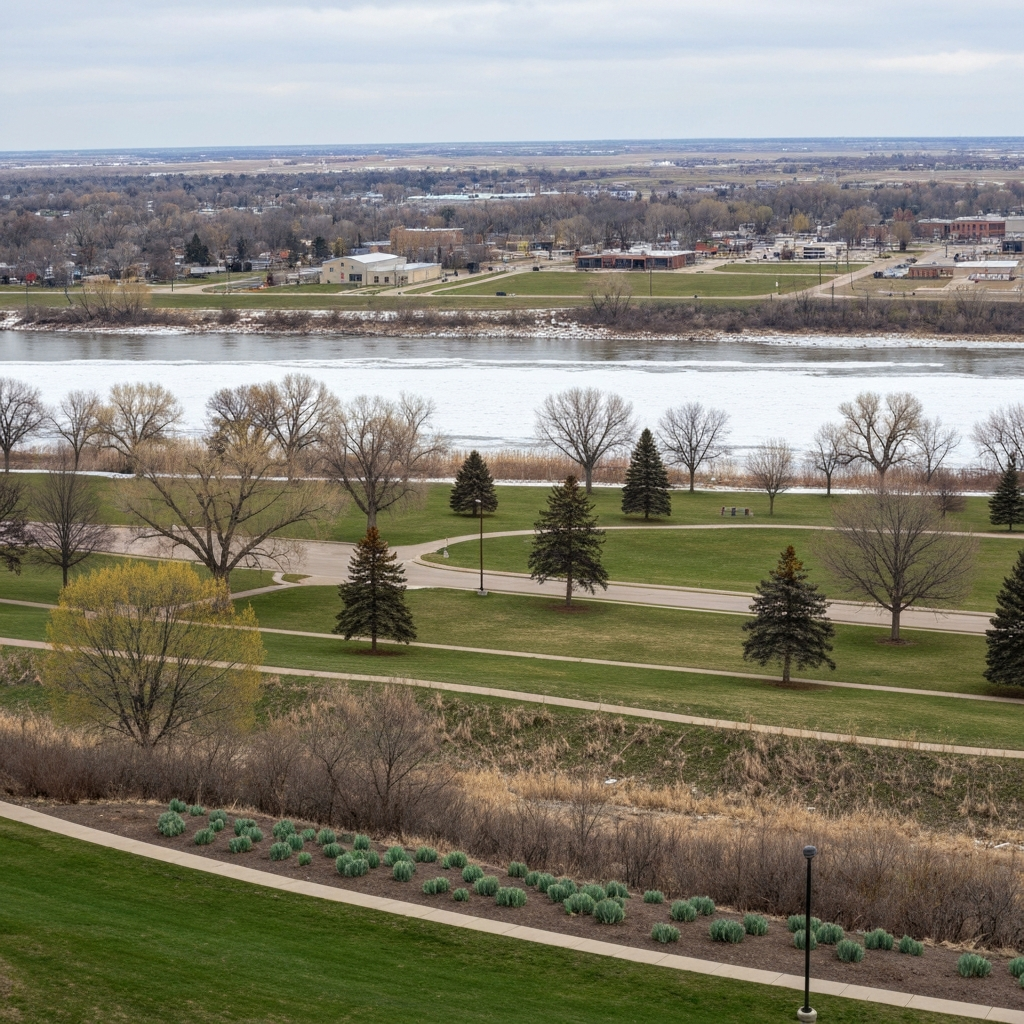
Bismarck, North Dakota, experiences a humid continental climate characterized by four distinct seasons, each bringing its own unique weather patterns. Understanding these seasonal changes can help residents and visitors prepare accordingly.
Winter: Cold and Snowy
Winters in Bismarck are notably cold, with average low temperatures in January around 2.6°F (-16.3°C) and highs reaching 22.8°F (-5.1°C). Snowfall is common, averaging approximately 50.2 inches per season. Residents should be prepared for frigid temperatures and occasional snowstorms during these months.
Spring: Gradual Warming
Spring brings a gradual increase in temperatures. By April, average highs reach 55.1°F (12.8°C), with lows around 30°F (-1.1°C). This season also sees an uptick in precipitation, averaging 1.21 inches in April, contributing to the blooming of local flora.
Summer: Warm and Humid
Summers are warm and can be humid, with July being the warmest month. Average highs in July are around 83.5°F (28.6°C), and lows are approximately 57.9°F (14.4°C). Thunderstorms are more frequent during this period, providing much of the annual precipitation.
Autumn: Cooling Down
Autumn sees a gradual cooling, with October average highs around 57.1°F (13.9°C) and lows near 32.9°F (0.5°C). Precipitation decreases compared to summer, and the changing foliage offers picturesque landscapes.
Being aware of these seasonal patterns allows for better planning, whether it’s preparing for winter’s chill or enjoying summer’s warmth.