

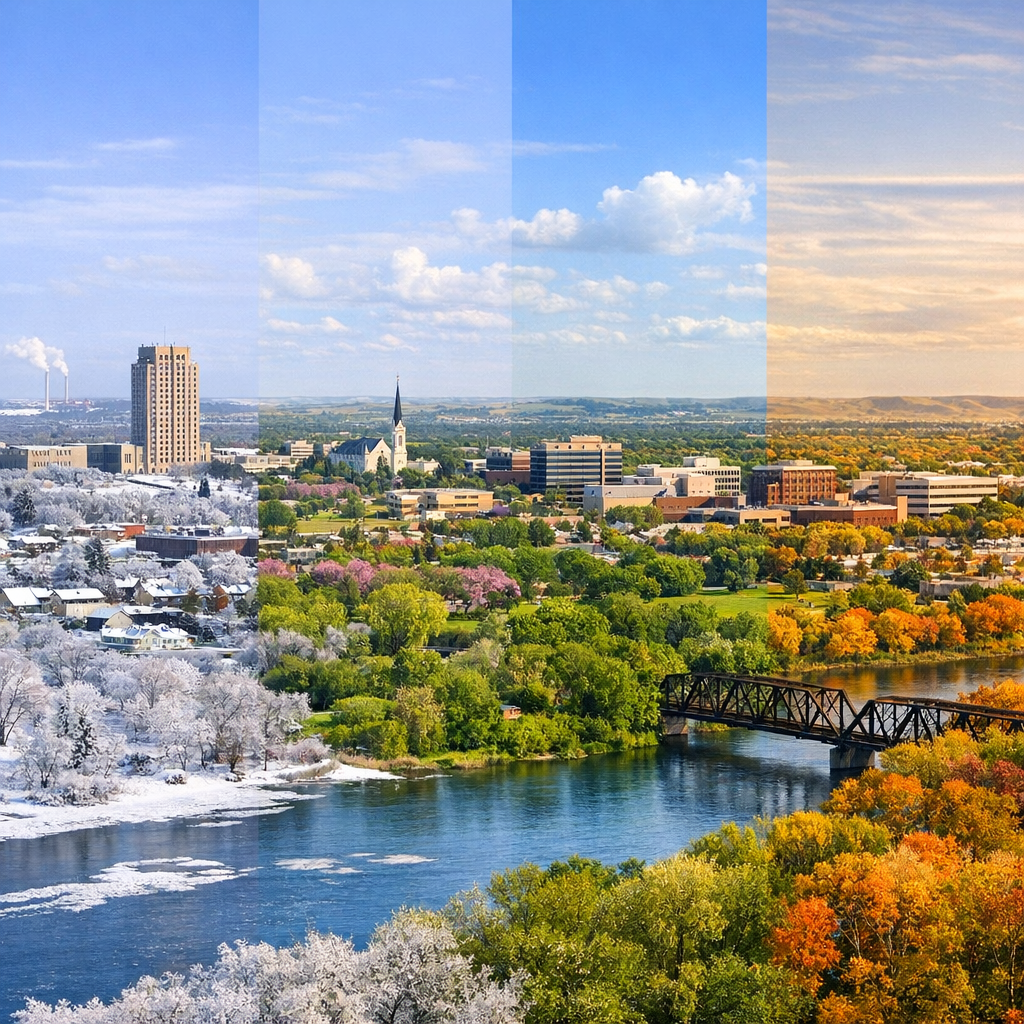
Bismarck, North Dakota, experiences a humid continental climate, characterized by four distinct seasons with significant temperature variations throughout the year. Understanding these patterns can help residents and newcomers prepare for the city’s diverse weather conditions.
Seasonal Overview
Winter
Winters in Bismarck are cold and snowy. Average high temperatures in January hover around 24°F (-4.4°C), with lows dipping to approximately 3°F (-16.1°C). Snowfall is common, contributing to the city’s winter landscape. Residents should be prepared for freezing temperatures and occasional snowstorms during this season.
Spring
Spring brings a gradual warming trend. By April, average highs reach 56°F (13.3°C), with lows around 30°F (-1.1°C). This season also sees an increase in precipitation, averaging 1.33 inches (33.8 mm) in April. The warming temperatures and increased rainfall contribute to the blooming of local flora.
Summer
Summers are warm and can be humid. July is typically the warmest month, with average highs of 84°F (28.9°C) and lows around 58°F (14.4°C). Thunderstorms are more frequent during this period, providing much-needed rainfall. Residents should be aware of the potential for severe weather, including thunderstorms and occasional tornadoes.
Autumn
Autumn sees a gradual cooling. By October, average highs are around 57°F (13.9°C), with lows near 33°F (0.6°C). Precipitation decreases compared to the summer months, and the changing foliage offers picturesque landscapes. This season is often considered one of the most pleasant times of the year in Bismarck.
Environmental Considerations
Bismarck’s climate influences various environmental factors:
- Flooding: The Upper Missouri River, near Bismarck, is subject to seasonal flooding. Residents in flood-prone areas should stay informed about flood risks, especially during spring thaw and heavy rainfall periods.
- Wildfires: Dry conditions, particularly in late summer and early autumn, can elevate wildfire risks. It’s essential to adhere to local guidelines regarding fire safety and outdoor burning.
- Tick Activity: Ticks are primarily active during warm-weather months (April through September). To prevent tick bites, residents should follow guidance from local health authorities, such as the North Dakota Department of Health.
By understanding Bismarck’s climate and associated environmental factors, residents can better prepare for and adapt to the city’s diverse weather conditions throughout the year.