

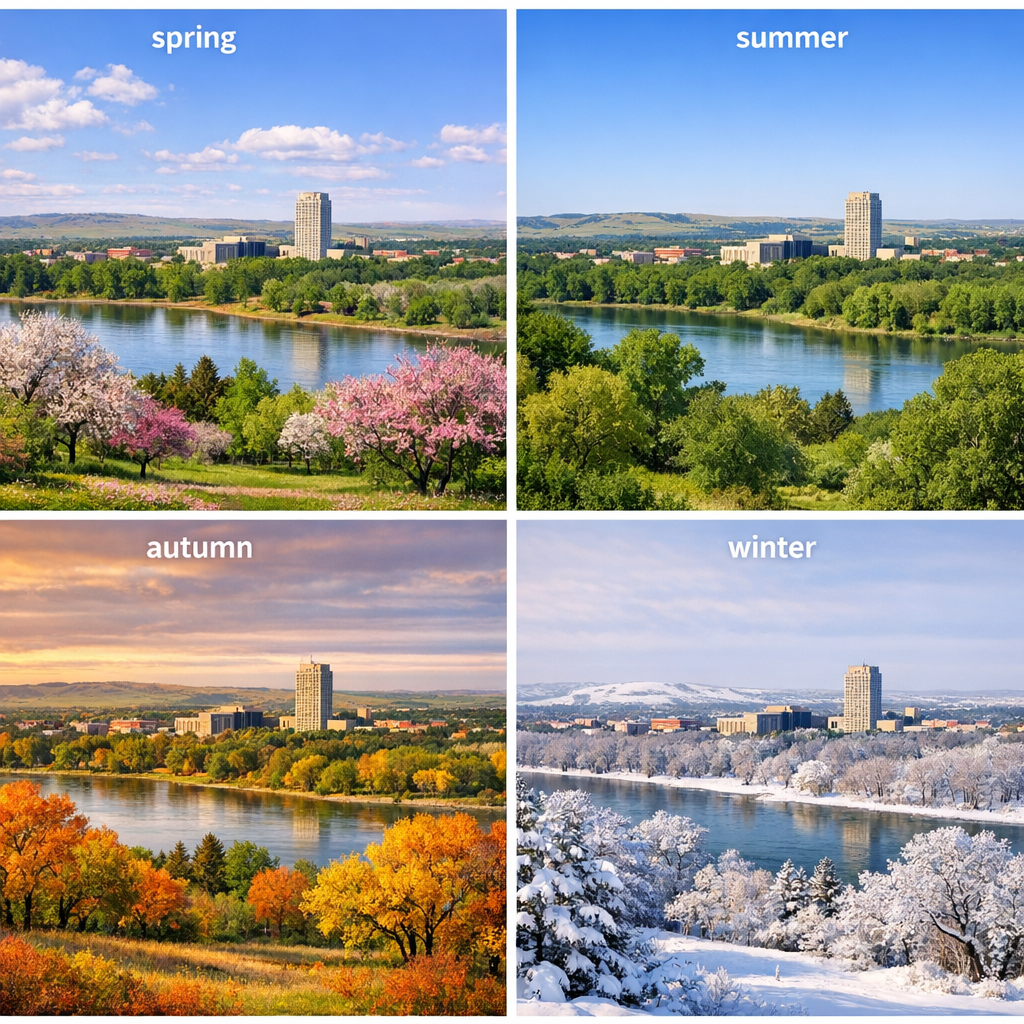
Bismarck, North Dakota, experiences a humid continental climate characterized by four distinct seasons, each bringing its own set of weather patterns and challenges. Understanding these seasonal variations can help residents prepare and adapt accordingly.
Winter: Cold and Snowy
Winters in Bismarck are typically cold, with average high temperatures around 24°F (-4°C) in January and lows near 3°F (-16°C). Snowfall is common, contributing to the city’s winter landscape. Residents should be prepared for freezing temperatures and ensure their homes and vehicles are winter-ready.
Spring: Transition and Renewal
Spring brings a gradual warming trend, with average highs reaching 56°F (13°C) in April. This season often sees increased precipitation, averaging 1.33 inches (34 mm) in April, leading to the blooming of local flora. It’s an ideal time for outdoor activities as the city awakens from winter.
Summer: Warm and Humid
Summers are warm, with July being the hottest month, averaging highs of 84°F (29°C) and lows around 58°F (14°C). Thunderstorms are more frequent during this period, providing much-needed rainfall. Residents should stay hydrated and be mindful of weather advisories during stormy conditions.
Fall: Cool and Crisp
Autumn sees a cooling trend, with October averages around 57°F (14°C) for highs and 33°F (1°C) for lows. The fall foliage offers picturesque views, making it a favorite season for many. It’s also a time to prepare for the upcoming winter months.
By understanding Bismarck’s climate patterns, residents can better plan their activities and ensure their safety throughout the year.